Introduction
Psoriasis is a long-lasting skin condition that causes red, scaly patches. Many people look for natural ways to manage and prevent it. The prevention of psoriasis with Ayurveda offers gentle, holistic methods for healthy skin. Ayurveda, an ancient Indian system of medicine, focuses on balance and natural remedies. In this blog, you will learn about Ayurvedic prevention of psoriasis, natural remedies for psoriasis, and practical tips for daily life.
What is Psoriasis?
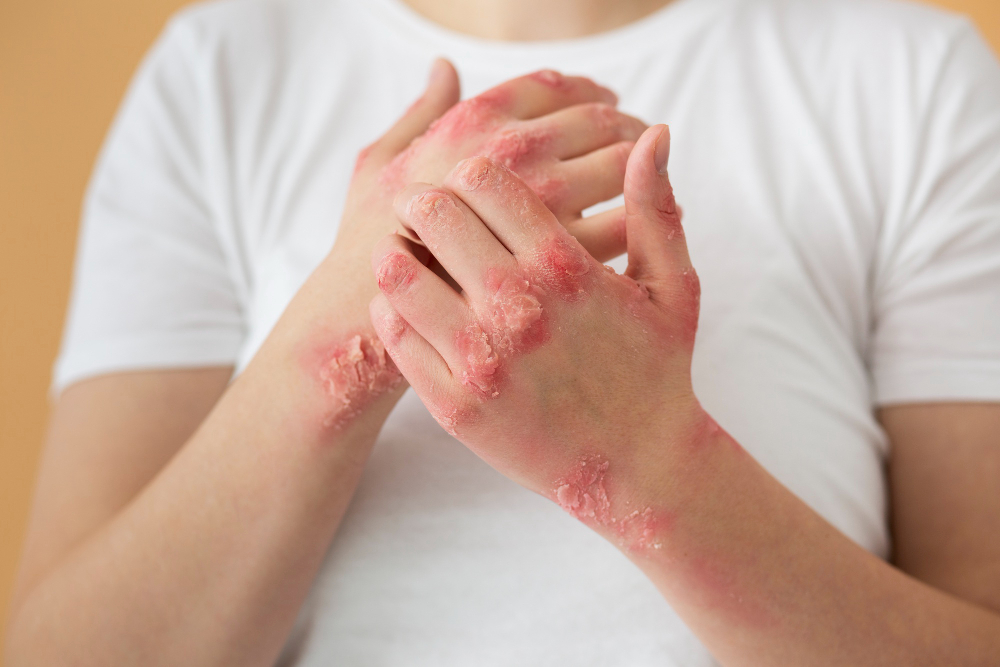
Psoriasis is a skin disease that speeds up the growth of skin cells. As a result, thick, red, and scaly patches appear on the skin. These patches can be itchy or sore. Often, they show up on the elbows, knees, scalp, or lower back. However, they can appear anywhere on the body. Psoriasis is not contagious, but it can affect a person’s confidence and comfort. Sometimes, it can also cause joint pain, known as psoriatic arthritis. According to the World Health Organization (WHO), psoriasis affects millions of people worldwide.
Causes and Triggers of Psoriasis
While the exact cause of psoriasis is not fully known, several factors can trigger it. In Ayurveda, these triggers often relate to lifestyle and diet. For example, eating spicy or oily foods, stress, and lack of sleep can make symptoms worse. Other common triggers include:
Because these triggers can vary, it is important to notice what makes your symptoms worse. Ayurveda in India often looks at these daily habits to find the root cause.
Ayurvedic Perspective on Psoriasis
Ayurveda believes that health comes from a balance of three energies, called doshas: Vata, Pitta, and Kapha. When these doshas are out of balance, skin problems like psoriasis can appear. According to Ayurveda, psoriasis is often linked to an imbalance of Pitta and Kapha doshas. This imbalance can cause toxins to build up in the body, leading to skin inflammation and scaling. Ayurvedic prevention of psoriasis focuses on restoring balance through diet, lifestyle, and herbal remedies.
Ayurvedic Prevention Strategies
Ayurveda offers many natural remedies for psoriasis and tips for healthy skin. These strategies aim to keep the doshas balanced and remove toxins from the body. Here are some common Ayurvedic prevention tips:
Diet
Lifestyle
Herbal Remedies
Stress Management
Daily Routines
Practical Tips for Daily Life
When to Seek Medical Advice
Although Ayurveda for skin health can help, sometimes you need professional care. If your skin patches spread quickly, become very painful, or start to bleed, see a doctor. Also, if you have joint pain or fever, get medical help right away. Remember, severe or sudden changes in your skin should not be ignored. Consulting an Ayurvedic specialist or dermatologist can help you find the best treatment for your needs.
For more information, you can visit trusted sources like the World Health Organization (WHO) or the Centers for Disease Control and Prevention (CDC).
Consult an Ayurvedic specialist or dermatologist for personalized guidance on psoriasis prevention.